
About our approach
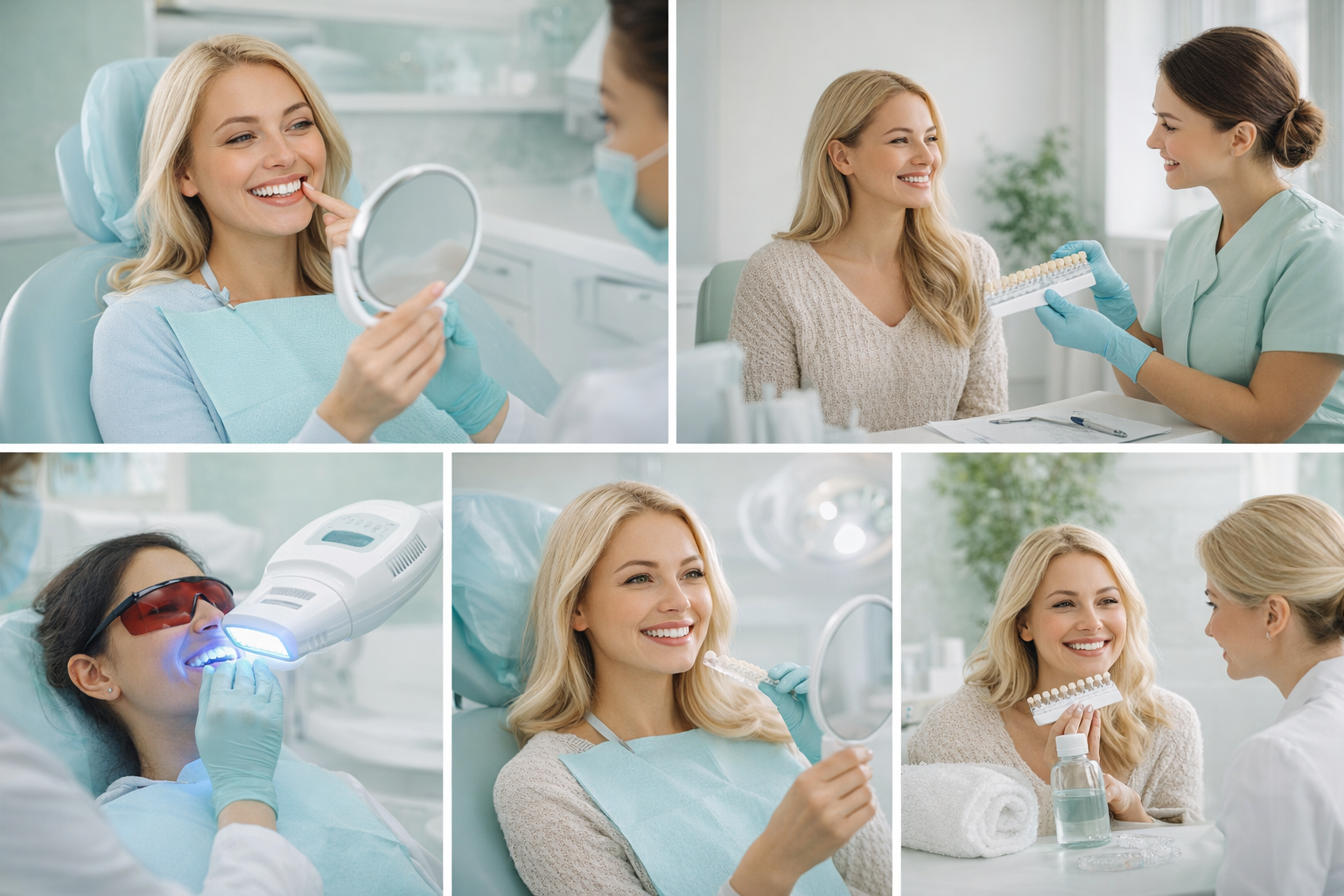
Teeth whitening should feel personal, not clinical. Our philosophy is built around respectful, evidence-informed care that puts each patient's comfort and expectations first. At this Teeth whitening clinic, we take time to understand why you want to whiten — whether it's to remove years of staining, to brighten for an upcoming occasion, or simply to feel more confident day to day. We avoid one-size-fits-all solutions. Instead, we look at your natural tooth shade, the type of staining, and your oral-health background, then design a plan that balances efficacy with gentle, predictable results.
Our approach includes:
- Explaining how different approaches work and what realistic results you can expect
- Prioritising methods that produce natural, harmonious whitening rather than an artificially stark appearance
- Selecting milder protocols and preparatory steps where sensitivity is a concern
- Ensuring oral health is stable before any whitening begins
- Identifying and addressing existing decay or gum issues first
We never rush the process, and we always check that whitening is the right next step for you rather than simply the quickest.
We also focus on individual comfort measures, offering pre-treatment routines for those prone to sensitivity. These include recommendations for specific desensitising toothpastes and for the timed use of remineralising gels, where appropriate. Our team explains the role of habits — such as frequency of tea or coffee intake — in staining, and offers practical, personalised suggestions that fit real lives. We believe this honesty builds trust: rather than promising dramatic, unsustainable outcomes, we aim for improvements that last and feel natural.
Importantly, we work collaboratively with your existing dental team where necessary. If you have ongoing dental treatment or complex restorative work, we coordinate to ensure whitening complements other care rather than creating mismatched shades or unnecessary procedures. We encourage questions and create space for people to make choices at a pace that suits them, from a single consultation to a staged treatment plan over weeks or months. Our care model is built on clarity, empathy, and respect, with a consistent focus on delivering results that enhance confidence without compromising dental health.
We also see many patients who are cautious because they have tried inexpensive or poorly supervised whitening in the past and had an unsatisfactory result. For these people, a professional clinic offers not only more predictable outcomes but also a chance to reset expectations and repair any issues caused by prior treatments. We carefully review any prior whitening attempts and explain how a clinician-led approach will differ, including how we protect soft tissues, manage concentrations, and provide follow-up.
Our clinicians take continuing professional development seriously; they keep up with emerging evidence so the methods we use reflect current best practice. We prefer to use products and protocols with reliable safety and efficacy data, and we tailor each plan to your dental history and lifestyle. Our conversations are straightforward and humble: we state what is known, what to expect, and what we cannot promise. That transparent approach helps patients make choices with confidence and feel supported throughout the process.
Why do people choose a professional Teeth whitening clinic
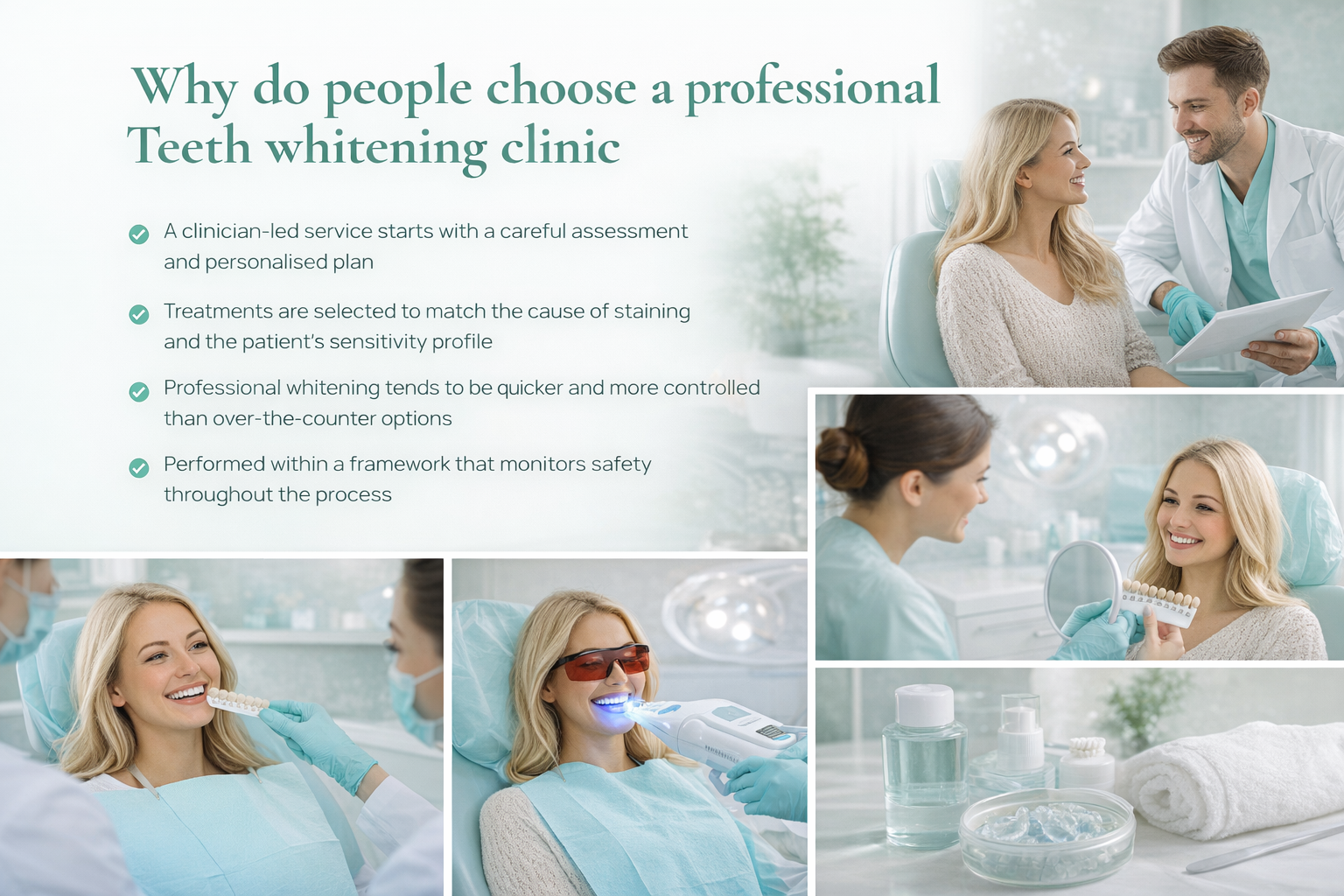
Many people consider whitening to be a simple cosmetic step, but choosing a professional setting brings important advantages:
- A clinician-led service starts with a careful assessment and personalised plan
- Treatments are selected to match the cause of staining and the patient's sensitivity profile
- Professional whitening tends to be quicker and more controlled than over-the-counter options
- Performed within a framework that monitors safety throughout the process
Another reason people choose a clinic is the reassurance it offers. Teeth whitening delivered by trained professionals comes with safeguards:
- The gums and soft tissues are protected during treatment
- Concentrations of whitening agents are appropriate for clinical use
- Progress is monitored and adjustments made if sensitivity appears
- Level of oversight not available with boxed home kits or non-clinical services
Patients also value the honest, realistic conversations we have about results. We avoid promising dramatic, unnatural changes and instead aim for a brighter, natural-looking smile that suits each person's facial features. The supportive environment, clear explanations, and personalised aftercare plans make many people feel more confident that they will achieve an outcome they are happy with. Finally, our clinic emphasises gentle care and comfort, so clients who have avoided whitening because of fear or past disappointment often find the experience much more manageable than they expected.
Many clients tell us they value:
- The reassurance of professional oversight and evidence-based planning
- Custom trays for occasional top-ups or refresher treatments if staining recurs
- A calm environment where the team is trained to listen and respond to concerns
- Clear understanding of likely sensations, realistic timelines, and ways to reduce sensitivity
- Alignment with UK standards and clinical governance for cosmetic dental care
We also spend time explaining the differences between short-term cosmetic fixes and longer-term oral health investments so that clients can weigh options clearly. This helps people decide if whitening aligns with their wider dental plans or whether alternative cosmetic steps might be preferable.
How teeth whitening works
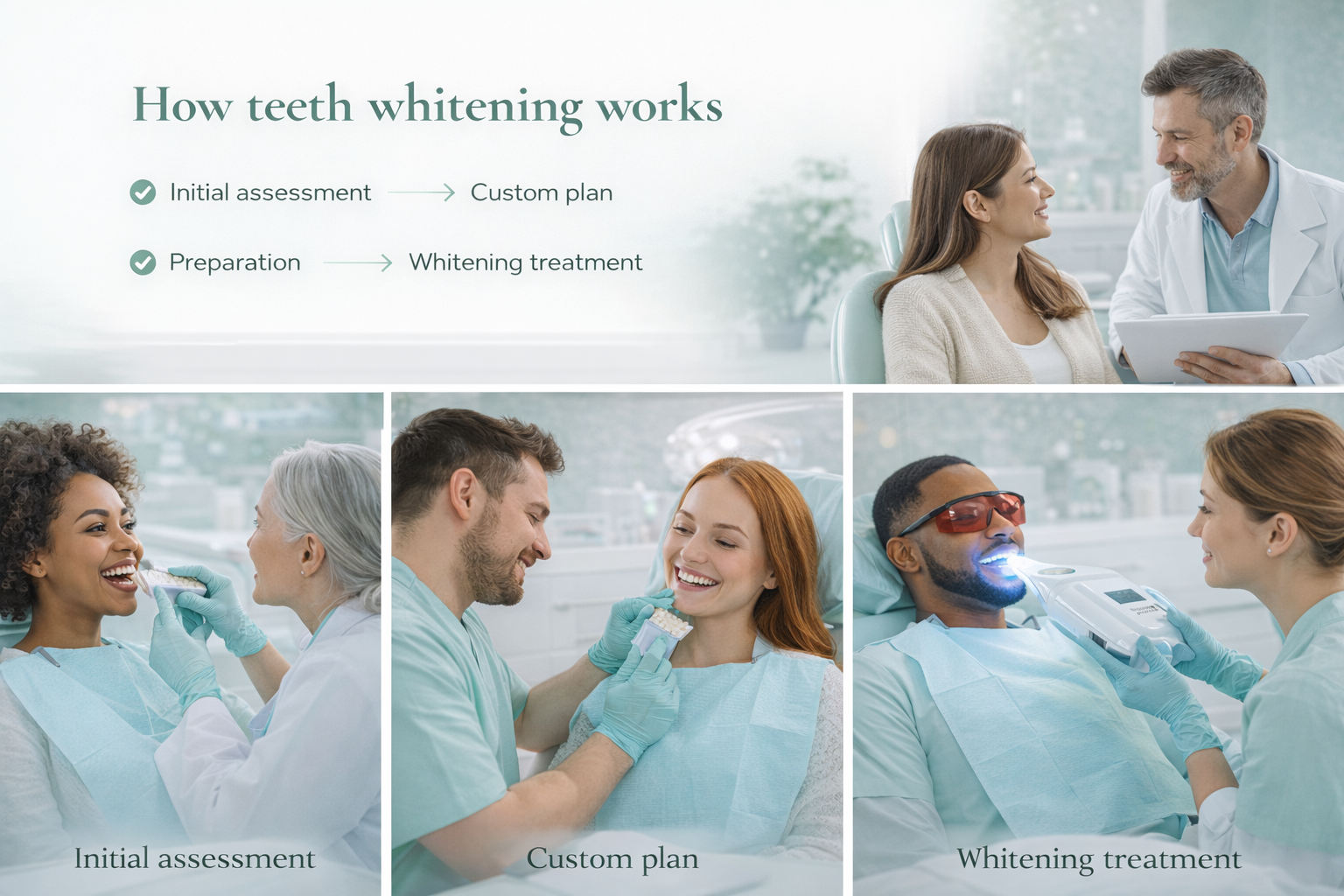
Understanding how whitening works helps set realistic expectations and reduces anxiety. In simple terms, whitening agents penetrate the outer layer of the tooth (enamel) to break down stains into smaller, less visible particles. The process targets both surface stains caused by food and drink and certain deeper discolouration, depending on the method used. Below, we explain the typical stages of a clinical whitening process in a clear, step-by-step way.
Step 1 — Initial assessment and suitability
Before any whitening begins, we carry out a thorough assessment. This involves examining the teeth and gums to check for decay, restorations, or underlying conditions that should be addressed first. We will talk through your dental history and note any past sensitivity or recent dental work, such as fillings or crowns. This stage is crucial because whitening is not suitable for everyone immediately; fixing cavities or stabilising gum health may be required before treatment to protect your comfort and the overall result. The assessment also identifies the staining — surface or intrinsic — and helps the clinician recommend the most appropriate approach. We use this time to answer questions and make sure your expectations are aligned with what whitening can realistically achieve.
Step 2 — Custom treatment planning
After assessment, we create a bespoke plan. This explains which whitening method is most suitable — for example, an in-clinic power treatment, a professionally fitted take-home tray system, or a combination of both. We discuss the expected number of sessions, the likely degree of improvement, and any steps we will take to manage sensitivity. The plan is documented and explained in plain language, so you understand why a particular approach is recommended and what it will involve. Informed consent is an important part of the process; we ensure you feel comfortable moving ahead and know the short-term steps and longer-term maintenance expectations.
Step 3 — Preparation and protection
On the day of treatment, we take practical steps to protect your mouth. Soft tissues such as the gums and lips are isolated and shielded, and we ensure your lips are comfortable throughout. If we are using a tray system, impressions may be taken, or a fitted tray prepared in advance. For in-clinic treatments, we will remove surface plaque and stain so the whitening agent can act evenly. Preparation also includes discussing possible sensations you might feel, including mild sensitivity, and confirming any measures, such as the use of desensitising agents, that can be used before or after treatment. This preparation ensures the agent acts where it will be most effective and minimises risks.
Step 4 — The whitening application
This is the active stage, during which the chosen whitening agent is applied under careful clinical control. Agents commonly used contain peroxide-based components that release oxygen molecules to break down stain compounds. For in-clinic sessions, a higher-strength formulation may be used for a shorter period under close supervision. For take-home systems, a lower-strength gel is used in custom trays for a prescribed number of hours each day or overnight across several days. We monitor the process, check comfort regularly, and explain what to expect at each interval. The clinician may repeat applications or combine approaches to achieve a balanced final shade while minimising sensitivity.
Step 5 — Aftercare guidance and follow-up
Following treatment, we provide a clear aftercare plan and schedule follow-up where appropriate. This will cover immediate steps — such as avoiding staining foods for a short period — and longer-term maintenance advice. We explain how to manage sensitivity should it arise and when it is sensible to seek reassurance. Follow-up allows us to measure the results and, if needed, perform gentle top-up treatments. The aftercare discussion is practical and personalised, focusing on realistic measures that fit your lifestyle and help preserve results over time.
Treatment types & suitability
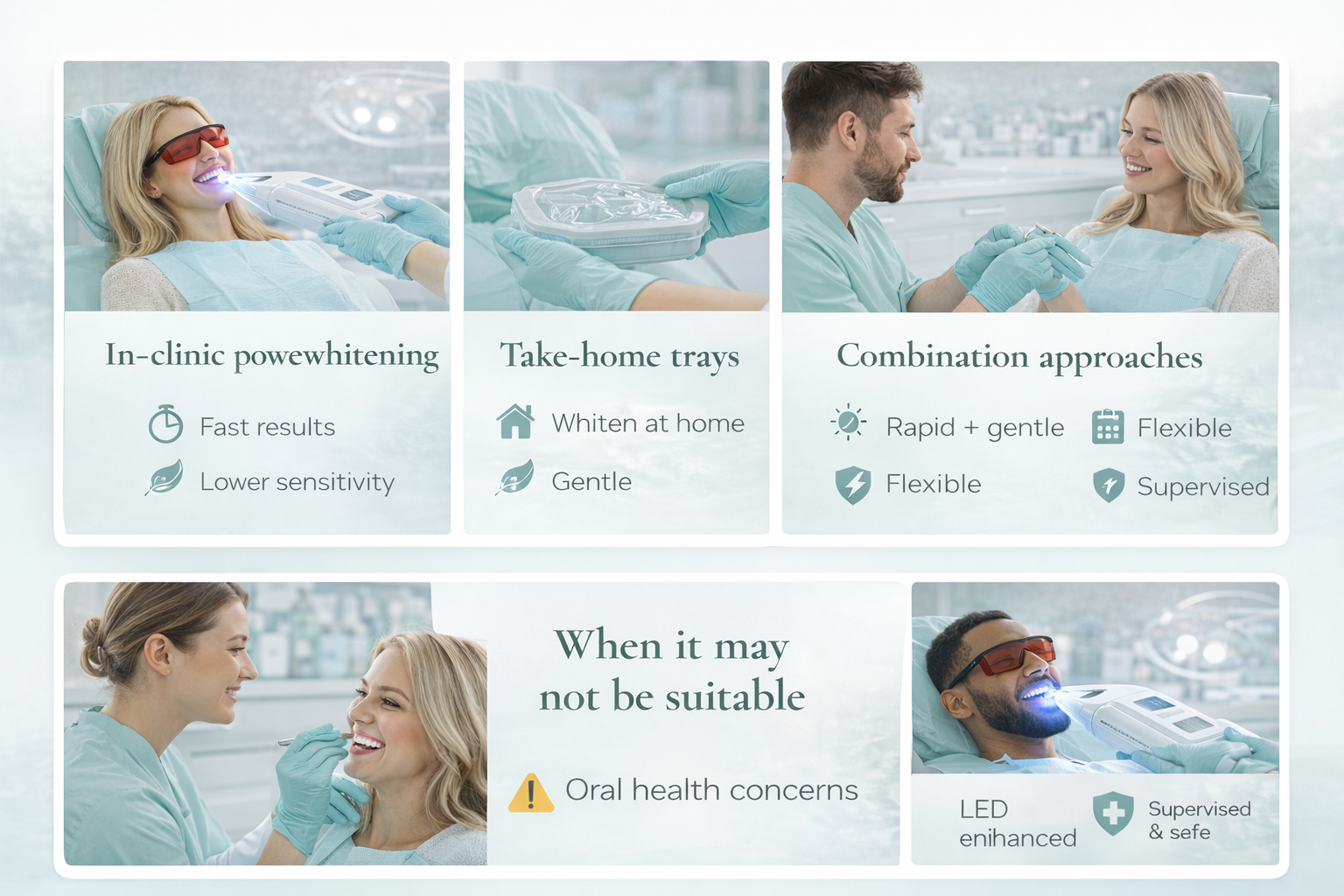
There is more than one safe, professional way to whiten teeth. The choice depends on the cause of discolouration, your dental history, and your sensitivity level. Below are commonly used, clinician-led options and who they typically suit. Each option is clinician-prescribed and tailored to your needs; below, we expand on suitability factors and common scenarios to help you decide which path might be best.
In-clinic power whitening
In-clinic power whitening is a popular choice for people wanting rapid, visible improvement in a single visit or a small number of visits. This method usually uses a higher-strength whitening gel applied by the clinician with careful gum protection. Light or heat may be used in some protocols to accelerate the process, but the key features are speed and clinical oversight. It suits people without significant sensitivity who seek a noticeable lift in shade over a short period. Clinicians carefully assess whether higher-strength in-clinic gels are appropriate, taking into account a patient's sensitivity history and enamel condition. If used, the concentration and session length are selected to balance efficacy and comfort, with rest periods between applications to reassess sensitivity. A discussion of likely shade improvement and realistic expectations is part of the planning, so you know what a single session may achieve and whether additional visits will be beneficial.
Professionally fitted take-home trays
Take-home trays are custom-made from impressions taken by the clinician and used with a professionally formulated lower-strength gel. This method spreads the whitening across several days to a few weeks and can be gentler for those with sensitivity. It is often recommended for patients who prefer to manage treatment at home while still benefiting from professional supervision. The clinician prescribes the exact wear time and gel strength, and can modify the plan if sensitivity emerges. Take-home trays are particularly useful for people who want gradual control over the whitening process. They allow you to monitor how your teeth respond to the gel and adjust wear times if sensitivity appears. Clinicians provide clear written instructions and an initial review to ensure you are using the trays correctly. This method is also convenient for those with busy schedules who prefer to carry out most of the treatment at home while maintaining clinical oversight.
Combination approaches
A combined approach uses a short in-clinic session to jump-start whitening, followed by take-home trays to refine and maintain the shade. This blends the immediacy of in-clinic treatments with the gentler, controlled progression of at-home trays. It suits people who want both rapid initial results and a slower, more controlled finish that reduces the chance of prolonged sensitivity. The clinician will tailor the timing and concentration to match your comfort and desired end shade.
LED/accelerated systems (clinician supervised)
LED-assisted whitening is offered in some clinics as part of a supervised protocol. While the underlying chemistry remains peroxide-based, LED light is used to activate or hasten the whitening reaction in certain systems. The evidence for adding light varies between products, and a clinician will explain potential benefits and limitations. This option should always be clinician-supervised, and it is not a substitute for careful assessment and protection of the gums and soft tissues. Where LED or light-accelerated systems are used, clinicians discuss the specific science behind the chosen product and whether the addition of light is likely to offer measurable benefits in that context. This helps set realistic expectations and avoids confusion created by marketing claims. We select systems with supporting clinical data and ensure any additional equipment is used only as part of a supervised protocol.
When professional whitening may not be suitable
Professional whitening is not always the right first step. Teeth with large restorations, crowns, or veneers will not change shade in the same way as natural enamel, and we will discuss how to manage mismatches. Likewise, children and pregnant or breastfeeding people are typically advised to wait. Deep intrinsic discolouration caused by medications or trauma may require alternative cosmetic approaches, such as internal bleaching or restorative treatments, which will be discussed during consultation. If you are considering whitening, being open about your full dental history allows the clinician to suggest alternatives where appropriate. For example, if intrinsic staining is prominent, we will carefully explain other cosmetic options such as composite bonding or ceramic veneers, and the trade-offs involved. Our priority is recommending the least invasive, most predictable path to the aesthetic outcome you desire.
What to expect — before, during, and after treatment
Before treatment, you will have a consultation where your dental history and current oral health are reviewed. We look for any signs of decay or gum disease and address those first. You will be shown your tooth shade, and we will discuss a realistic target shade and timeline. Expect the clinician to talk through any potential for sensitivity and describe the aftercare plan so nothing feels surprising on the day.
During the treatment, the environment is calm and clinical. If you are having an in-clinic session, you will be comfortably positioned, and the clinician will protect your gums and lips before applying the whitening agent. The application takes time, and depending on the protocol, there may be short breaks between gel applications to check comfort. For tray-based systems, the initial appointment focuses on making accurate impressions and fitting the trays. A thorough demonstration is given so you feel confident using them at home.
After treatment, it is normal to experience mild, temporary sensitivity for a few days. This usually settles with conservative measures such as short-term use of desensitising toothpaste and avoiding very hot or cold foods for a few days if uncomfortable. We provide practical advice on when to resume normal routines and when to seek reassurance. Follow-up checks ensure the response to treatment is within expected ranges and allow us to make any small adjustments for comfort or final shade matching.
It can help to bring questions to the consultation — for example, about previous whitening attempts, any history of sensitivity, or whether you have many restorations. During in-clinic sessions, the clinician will check comfort between applications and adjust timing if needed. Appointments are planned to avoid rushing, and we aim to create a relaxed atmosphere where patients can ask questions at every stage. Aftercare guidance includes using gentle, non-abrasive toothpaste during the recovery phase and scheduling any necessary review appointments. We also discuss the long-term plan: whether you will use occasional top-ups, lifestyle adjustments, or a staged approach to achieve a gradual change that feels most natural to you.
We also invite patients to bring a recent photograph of a full smile when practical; seeing how different shades suit your face can be helpful during the consultation. We outline appointment lengths and let you know what to expect in terms of time in the chair so there are no surprises. We also review how whitening will interact with any ongoing dental work, such as orthodontics or restorative treatment, to ensure the outcome is integrated with your overall plan.
Aftercare & maintenance
Maintaining a brighter smile is easier with a few practical steps. For the first 48 to 72 hours after whitening, it helps to avoid foods and drinks that cause staining:
- Strong tea and coffee
- Red wine
- Dark sauces
- Highly coloured soft drinks
If you do consume these, rinsing your mouth with water soon afterwards reduces contact time with the teeth.
Good oral hygiene is important:
- Brush twice daily with a fluoride toothpaste
- Daily interdental cleaning helps prevent surface staining
- Use desensitising toothpaste regularly if you experience sensitivity
- Top-up treatments with take-home trays can refresh the shade infrequently
We also discuss cosmetic habits such as the timing of teeth-whitening relative to other dental procedures. For instance, some people plan whitening before replacing a visible restoration so the final restoration can be matched correctly. For those keen on longer-term maintenance, we can supply maintenance gels and show how to use them periodically to preserve shade. If sensitivity occurs, we advise on the appropriate use of desensitising agents and when to pause treatment until comfort returns. Our aftercare is pragmatic and tailored — we prefer small, consistent actions that slot into everyday life rather than demanding, unrealistic routines.
For customers who travel often or have irregular routines, we provide tailored advice on protecting results while away from home and maintaining hygiene with limited resources. These practical tips include travel-sized supplies and straightforward routines that don't take up extra time yet make a real difference to longevity. We provide clear written aftercare notes to help patients remember best practices at home, and we encourage them to contact the clinic if any questions arise. That post-treatment support is part of our commitment to ensuring outcomes are comfortable and sustainable.
Frequently asked questions
Results, longevity & smile maintenance
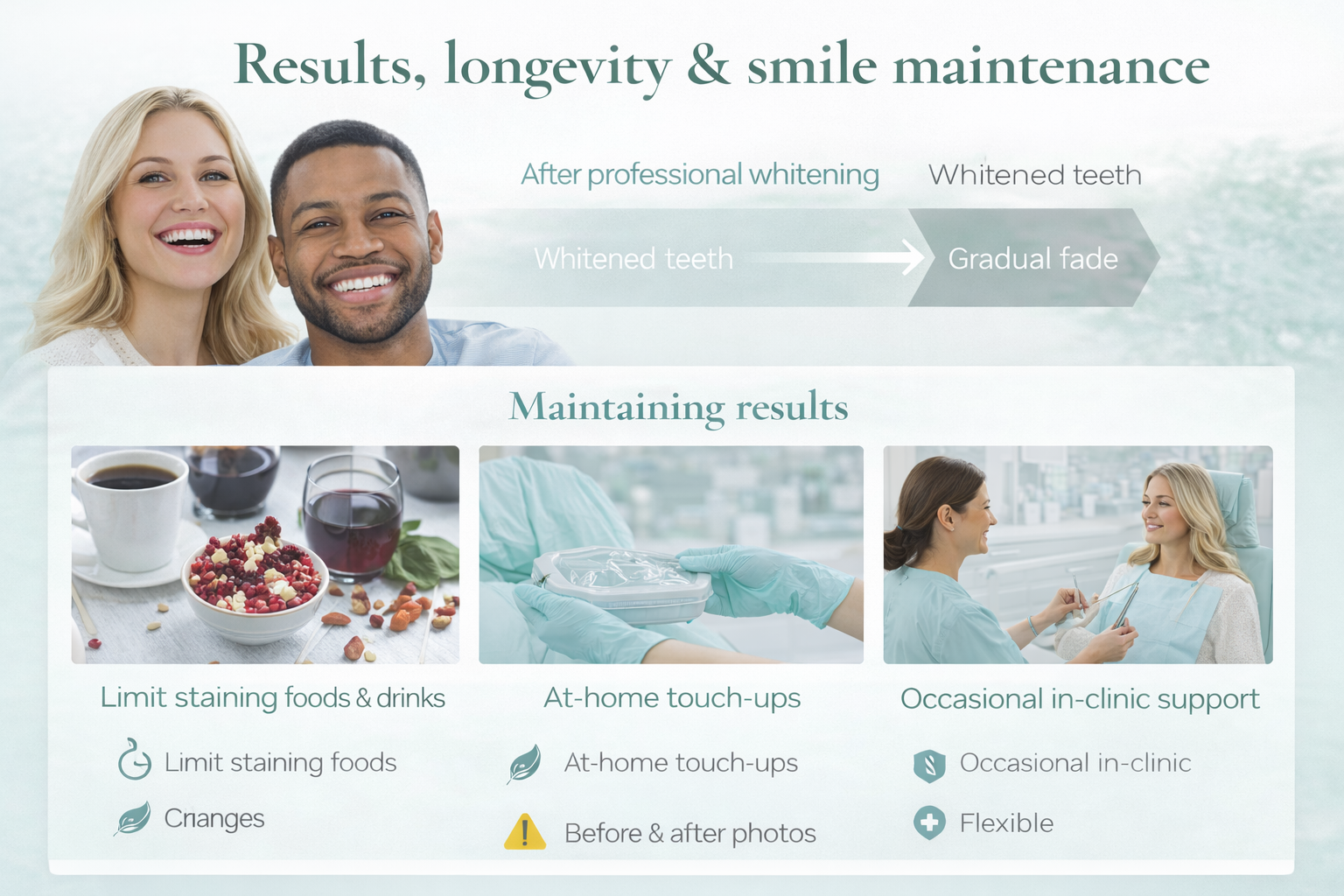
How long whitening lasts depends on individual factors and daily habits. Immediately after professional whitening, most people see a clear, noticeable lift in shade. Over weeks and months, normal exposure to staining substances will gradually reduce the brightness. With sensible habits and periodic touch-ups using professionally supplied trays or in-clinic top-ups, many maintain a pleasing shade for a year or more. In contrast, others may prefer a small refresh every few months. The best strategy is to combine good daily hygiene with occasional professional support so the result feels natural and sustainable.
We also explain when a top-up might be appropriate and when a restorative approach is needed. For example, uneven or isolated discolouration can sometimes be better addressed with a veneer or bonding rather than repeated whitening, and we discuss this openly. Keeping a photographic record of shade changes also helps make these decisions later, and we routinely use before-and-after photos (with patient consent) to track progress and guide maintenance.
Patient experience & feedback summary
Many patients describe the experience as straightforward and professionally managed. Common feedback highlights the calm, informative consultations and the clinician's careful attention to sensitivity and comfort. People appreciate honest conversations about realistic outcomes and practical aftercare. While individual experiences vary, a recurring theme is that professional oversight instills confidence in the safety and outcomes of the procedure. Anonymous summaries of feedback commonly highlight the clarity of communication and the gentle pace of treatment. Patients often comment that the clinician's measured approach helped them avoid the discomfort they expected, and that the aftercare advice was straightforward to follow. The sense of being listened to and respected during decisions about their smile is a recurring theme.
We also collect anonymous feedback on specific process elements — such as clarity of written instructions for take-home trays and the perceived helpfulness of follow-up calls — and use this to improve services continuously.
Accessibility & safety statement
Our clinic aims to be welcoming and accessible. If you have mobility needs or require additional support, please mention this during booking so we can make suitable arrangements. Safety is paramount: all treatments are performed by trained clinicians in accordance with current best-practice protocols. We will always discuss the benefits and limitations of whitening and encourage consultation for individual suitability. If you have communication needs or require adjustments to appointments, we aim to accommodate reasonable requests and to make the consultation as comfortable as possible.
Questions to ask at your consultation
Bringing a few focused questions to your consultation can help you make the most of the appointment. Useful examples include:
- What is the likely improvement in shade for my teeth?
- Are there any reasons whitening might not be suitable for me?
- How will sensitivity be managed if it occurs?
- Will any existing restorations need to be replaced to match the new shade?
- What maintenance routine do you recommend for my lifestyle?
- What is the expected timeline and follow-up appointment schedule?
If you have tried whitening before, mention the product used, the wear time, and any reactions you experienced. That information helps the clinician tailor a safer, more effective plan. A concise list of practical questions gives you confidence in the decision and ensures the consultation addresses your priorities.
Common myths about teeth whitening
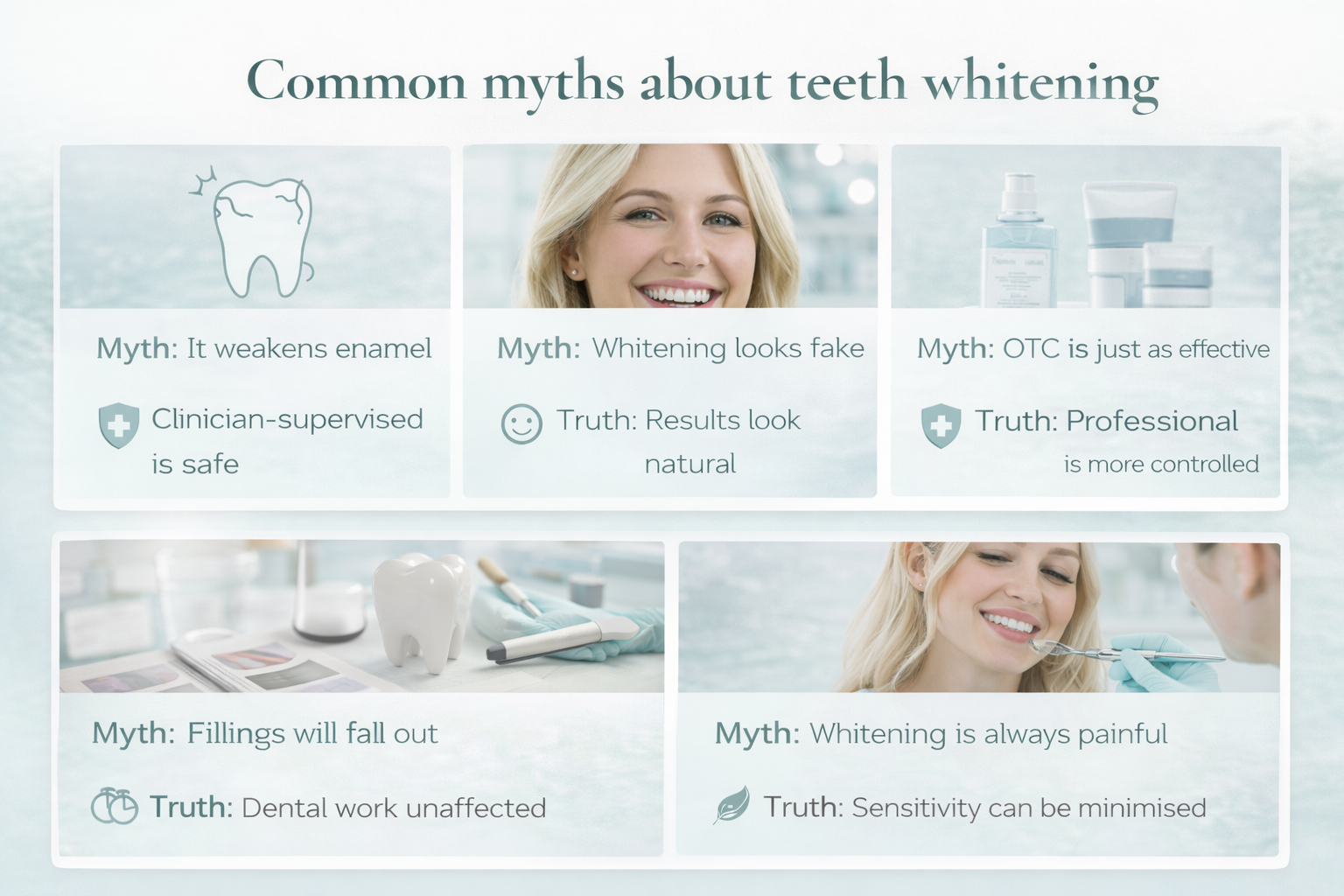
- Myth: Whitening will permanently weaken enamel. Truth: When performed appropriately by a professional, whitening is safe and enamel strength is preserved.
- Myth: Whitening always makes teeth look unnaturally white. Truth: Professional care aims for a natural, harmonious result tailored to your facial features.
- Myth: Over-the-counter options are just as effective as clinic treatments. Truth: OTC products may reduce surface stains, but they lack the consistent control and professional oversight of clinician-led care.
- Myth: Whitening damages fillings or causes them to fall out. Truth: Whitening does not remove dental work; restorations do not change colour and may need replacement to match a new shade.
- Myth: Sensitivity is always severe. Truth: Mild sensitivity can occur but usually settles with conservative measures and can be minimised with appropriate care.
Final reassurance
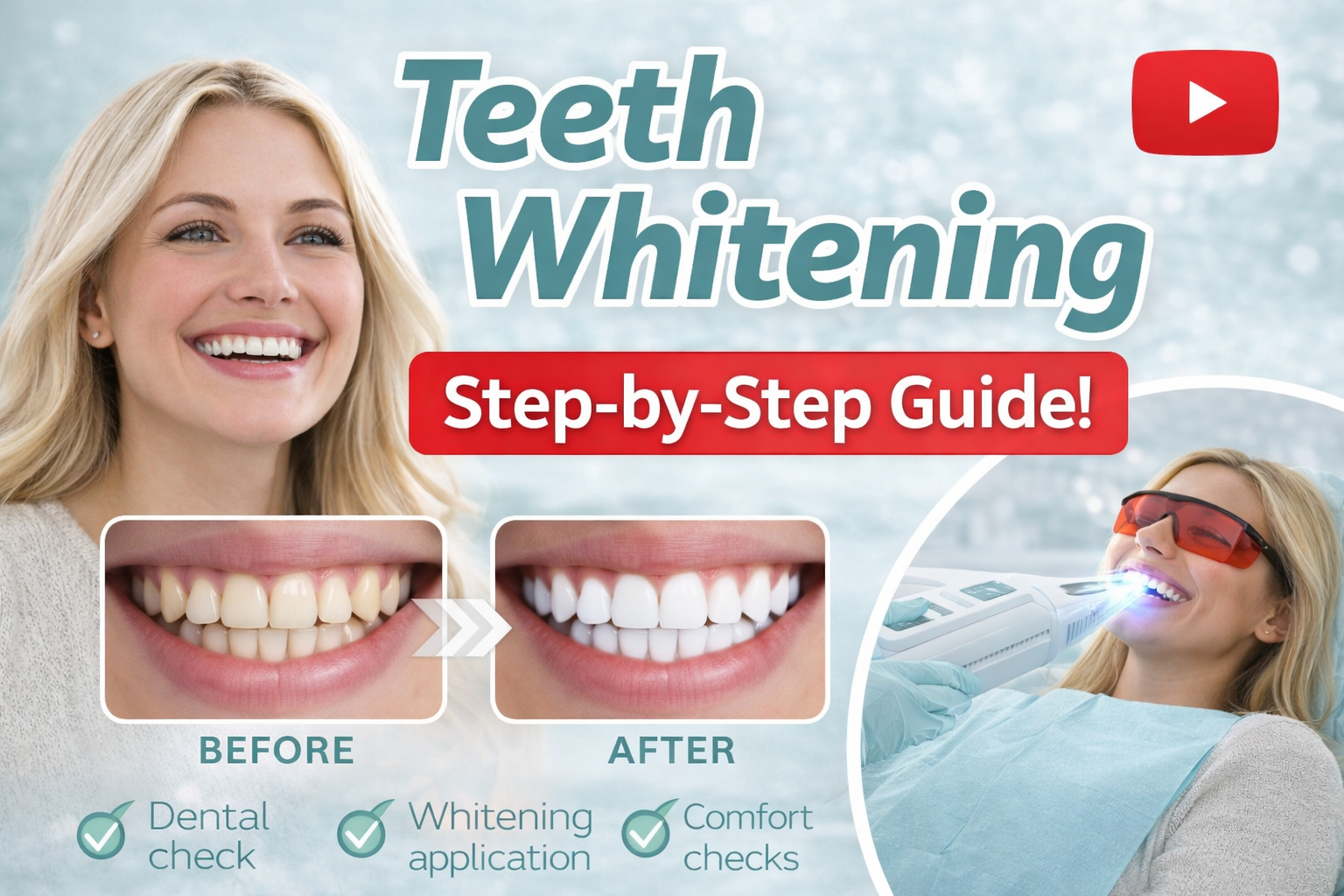
If you are considering professional whitening, we are here to explain the options and help you make an informed choice. A short consultation will clarify suitability, set realistic expectations, and outline a comfortable plan tailored to you. We take time to answer questions, to discuss how whitening fits with any existing dental work, and to provide clear aftercare guidance so you feel confident at every stage. If you would like more information or to talk through what to expect, please get in touch to arrange a convenient time to discuss your needs.