What this page is really about

You have probably been thinking about teeth whitening for a while now. Maybe you have scrolled through dozens of websites, looked at a few before and after photos, and still found yourself wondering whether the results are genuinely that noticeable — or whether the pictures are just clever lighting and camera angles. That hesitation is completely normal. Nobody wants to commit to a treatment without knowing what they are actually going to get out of it.
That is exactly why this page exists. Not to sell you on anything. Not to throw vague promises at you. Just to lay out, in plain and honest detail, what teeth whitening results really look like, how much of a difference you can realistically expect, and why so many people walk away from their session genuinely surprised by the transformation staring back at them in the mirror, https://chelmsford.lateethwhitening.co.uk/before-after-laser-teeth-whitening-results/ For readers who want a closer look at real before-and-after examples.
Here is something worth knowing before you read any further. Professional teeth whitening uses a standardised shade guide — the most common one is called the VITA shade guide — to measure the colour of your teeth before and after treatment. Think of it as a colour chart specifically designed for teeth, ranging from the darkest natural shades all the way through to the brightest whites. Most people who go through a professional teeth whitening session see an improvement of somewhere between four and twelve shades on that guide. Four shades is already a very visible difference. Twelve shades is a dramatic transformation. Where you land on that scale depends on several things — your starting shade, the type of staining you have, and how your teeth respond to the whitening gel. But the vast majority of people fall somewhere comfortably within that range, and almost everyone walks out noticeably brighter than when they walked in.
The photos and descriptions throughout this page are here to give you an unfiltered look at what teeth whitening actually does. Different types of stains, different starting points, different people — all with one thing in common: a visible, genuine improvement in the brightness and appearance of their smile.
If you have been on the fence, keep reading. Sometimes the best thing you can do is look at what is actually possible before making up your mind.
What teeth whitening results actually look like
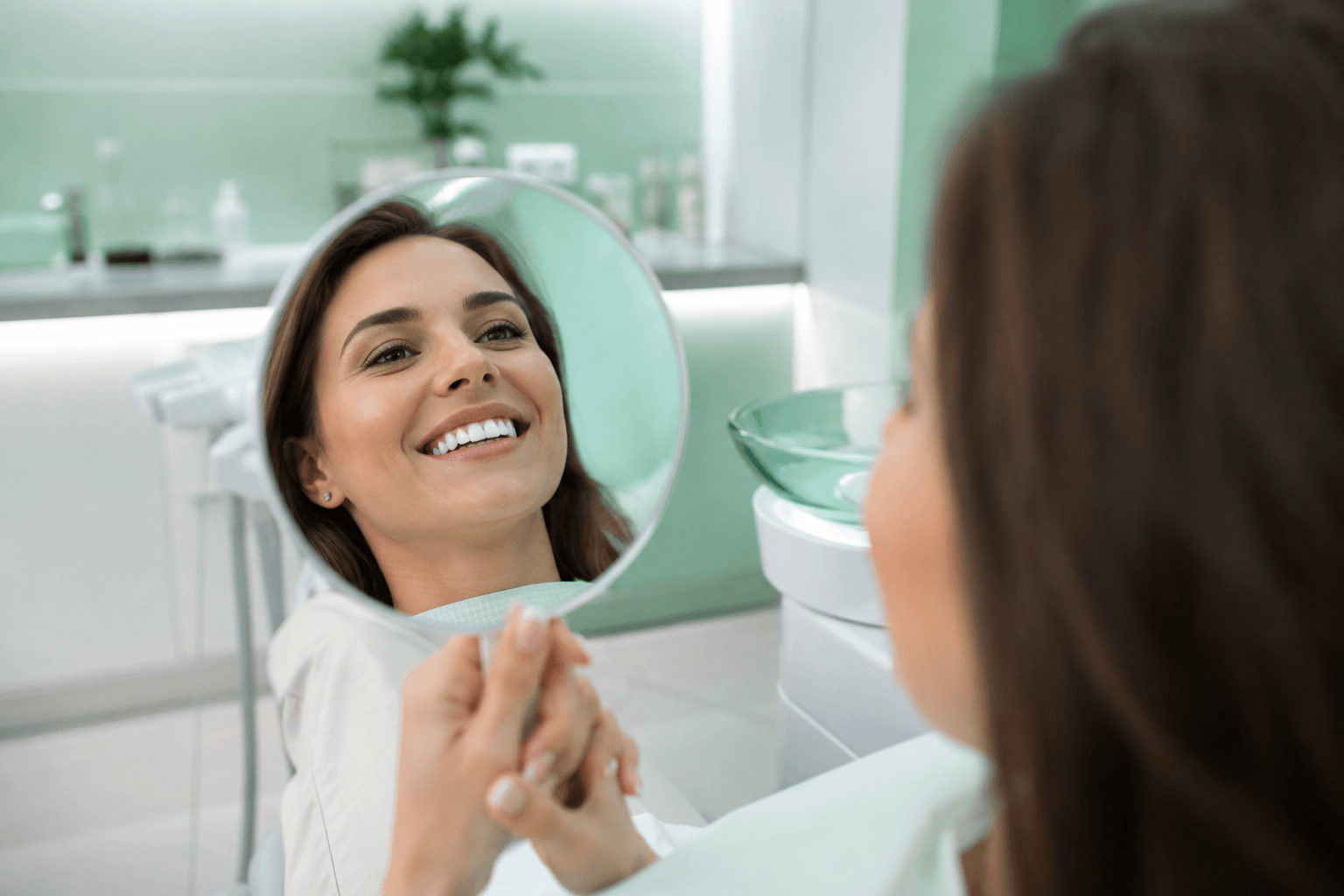
There is a moment during every teeth whitening session that catches people off guard. It usually happens right at the end, when the protective covering comes off and they see their teeth for the first time since the treatment started. The reaction is almost always the same — a small pause, followed by a wide grin they cannot seem to stop. It is not because their teeth suddenly look fake or unnaturally bright. It is because the teeth they have been looking at every day in the mirror — teeth they had stopped really seeing — suddenly look clean, fresh, and years younger. For anyone wanting to explore more examples of real results, you can visit https://coventry.lateethwhitening.co.uk/contact-us/. That quiet moment of surprise is probably the most honest review teeth whitening ever gets.
So what does the change actually look like? Let us walk through it.
Before a teeth whitening session, most people's teeth sit somewhere in the yellow to brownish-yellow range on the shade guide. Some have a fairly even tone across all their teeth. Others have noticeably darker patches — especially along the gum line, between teeth, or on the lower front teeth where staining tends to build up fastest. The overall impression is usually one of dullness. The teeth do not catch the light. They do not look unhealthy, necessarily, but they do not look vibrant either. It is the kind of gradual change that happens so slowly over years that you stop noticing it until someone points it out — or until you see an old photograph of yourself and realise your smile used to look quite different.
After a professional teeth whitening session, the shift is immediate. The yellowish cast lifts. The brownish tones along the edges soften or disappear entirely. What is left is a cleaner, brighter base tone that looks natural but noticeably improved. Your teeth do not suddenly turn Hollywood-white unless they were already close to that shade to begin with. What they do is return to a version of themselves that looks well-cared-for, youthful, and fresh. Colours even out. Dark patches fade. The overall effect is one of consistency and brightness — like the difference between a shirt that has been washed a hundred times and one that is brand new.
The type of staining you have plays a big role in exactly what your results look like. Surface-level staining — the kind caused by everyday food and drink — tends to respond the fastest and most dramatically. This includes the yellowing from coffee, the brownish tinge from tea, and the greyish haze that builds up from red wine over time. These stains sit on and just beneath the surface of the enamel, which means the whitening gel can reach them efficiently and break them down within the session.
Deeper discolouration — such as staining that has settled into the tooth structure over many years, or the natural darkening that comes with age as enamel thins — still responds to professional teeth whitening, but the results may be slightly more subtle. You will still see a clear improvement, but it may take you from a deep yellow to a soft warm white rather than from yellow to brilliant white. That is still a significant and very visible change, and most people with deeper staining are pleasantly surprised by how much brighter their smile looks afterward.
The key thing to understand is that teeth whitening does not promise identical results for every single person. What it does promise — and consistently delivers — is a visible improvement. Every time. The degree of that improvement varies, but the direction is always the same: brighter, cleaner, and more even.
Results breakdown by common stain types
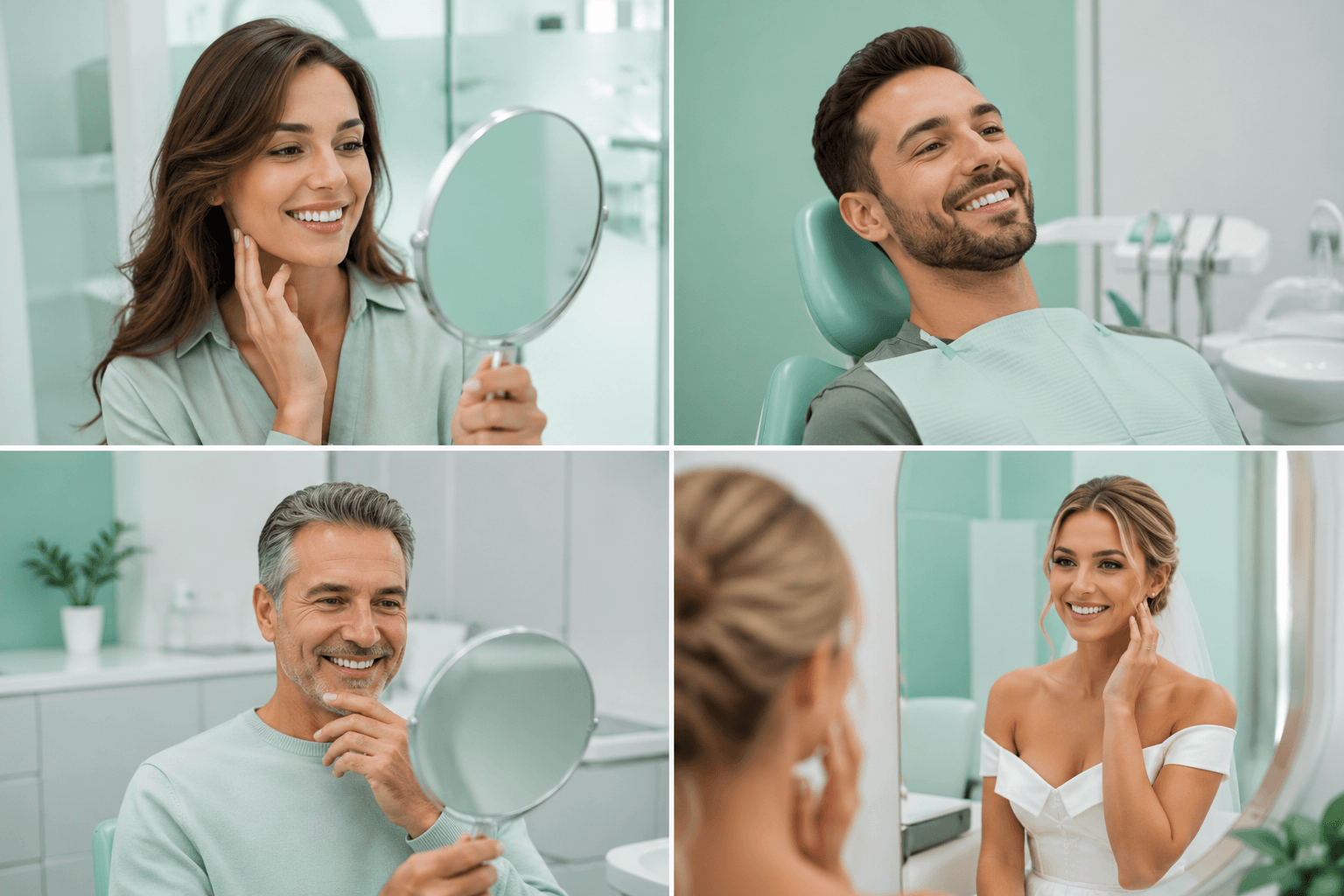
One of the most helpful things about looking at teeth whitening results is seeing how the treatment performs against specific types of staining. Everyone's teeth tell a different story, and the stains they carry reflect years of habits, choices, and biology. Here is a closer look at what teeth whitening results typically look like for the most common stain types.
Teeth whitening results for tea and coffee stains
Tea and coffee are two of the biggest culprits behind everyday tooth discolouration, and they are also two of the hardest habits to give up. If you drink two or three cups a day — and most people drink more than that — the tannins in these beverages gradually build up on the surface of your teeth, creating a yellowish-brown film that no amount of regular brushing can fully remove. Over the course of months and years, this film settles in and becomes part of what your teeth look like. You stop noticing it because it happens so gradually. But it is there.
Before teeth whitening, teeth stained by tea and coffee typically show a warm, brownish-yellow tone across the front surfaces. The staining is often heavier near the gum line and in the small grooves and ridges of the tooth surface where liquid pools during drinking. The lower front teeth — which sit directly behind the lip and are exposed to every sip — tend to be the worst affected. Some people also notice that their teeth look slightly different shades from one to the next, because staining does not settle evenly.
After a professional teeth whitening session, tea and coffee stains respond remarkably well. Because this type of staining is largely surface-level, the whitening gel breaks it down efficiently, often within the first twenty minutes of the treatment. The brownish undertone lifts, the yellow fades, and what is left underneath is a cleaner, more consistent shade. Most people with tea and coffee staining see an improvement of six to ten shades on the VITA guide — which is a substantial and immediately noticeable difference. The teeth look fresher, lighter, and more even across the smile. It is one of the most satisfying transformations to see because the contrast between before and after is so stark.
Teeth whitening results for smokers
Tobacco staining is a different beast. If you have smoked for any length of time — whether cigarettes, roll-ups, or cigars — you already know that the staining it causes is stubborn. Nicotine and tar do not just sit on the surface of the enamel the way tea or coffee stains do. They work their way into the microscopic pores of the tooth surface and settle in, creating a deep yellowish-brown discolouration that is often uneven and patchy. Heavy smokers sometimes notice a greyish tinge as well, particularly on the backs and edges of their teeth. The spaces between teeth tend to accumulate the most visible staining, and the overall impression is one of dullness and heaviness that regular toothpaste barely touches.
Before teeth whitening, smokers' teeth typically sit at the darker end of the shade guide. The colour is rarely uniform — some teeth appear darker than others, and there is often a gradient from slightly lighter at the biting edge to significantly darker near the gum line. This uneven appearance is one of the things that bothers people the most about tobacco staining, because it makes the teeth look neglected even when the person brushes regularly and takes good care of their oral health otherwise.
After a professional teeth whitening session, the transformation for smokers is often among the most dramatic of any stain type. Because there is so much room for improvement — the starting shade is typically quite dark — the contrast between before and after can be striking. The deep yellow lifts to a warmer, lighter tone. The greyish patches brighten. The uneven colouring evens out as the whitening gel works across all the tooth surfaces simultaneously. Most smokers see an improvement of eight to twelve shades, and many say it is the first time in years that their teeth have looked genuinely clean. It is worth mentioning that continuing to smoke after teeth whitening will eventually cause new staining to build up again, but the immediate results are undeniable and often serve as a powerful motivator for people who are thinking about cutting down.
Teeth whitening results for age-related discolouration
This is one that catches a lot of people by surprise. You might not smoke. You might not drink coffee. You might brush twice a day, floss regularly, and do everything your dentist has ever told you to do — and your teeth can still gradually turn yellow over the years. That is because tooth discolouration is not just about what you eat and drink. It is also about biology.
As you get older, the outer layer of your teeth — the enamel — naturally wears down and becomes thinner. Underneath the enamel sits a layer called dentin, which is naturally yellow. As the enamel thins, more of that yellow dentin shows through, and your teeth start to look progressively darker and warmer in tone. This process happens to virtually everyone, regardless of how well they look after their teeth. It is one of the reasons why old photographs often show a younger version of you with a noticeably brighter smile — it was not just the lighting. Your teeth genuinely were whiter back then.
Before teeth whitening, age-related discolouration typically presents as a uniform, warm yellow tone across most of the teeth. It is usually quite even, without the patchiness of tobacco staining or the gum-line concentration of tea and coffee stains. The overall look is one of gradual fading — as if someone slowly turned down the brightness on your smile over the course of a decade or two.
After teeth whitening, age-related discolouration responds well, though the degree of improvement depends on how much enamel remains. Most people see an improvement of four to eight shades, which translates to a noticeably brighter, fresher-looking smile that can genuinely take years off your appearance. The warm yellow fades to a softer, lighter tone, and the teeth regain a vibrancy that had been quietly slipping away. Many people in their forties, fifties, and beyond say that teeth whitening made them feel like they got a piece of their younger self back — and it is easy to see why when you compare the before and after.
Teeth whitening results for special occasions
Not everyone who gets their teeth whitened is trying to fix a long-standing problem. A huge number of people seek out teeth whitening because they have a specific event coming up and they want to look and feel their absolute best for it. Weddings are the most common trigger — both for brides and grooms — but job interviews, milestone birthdays, reunions, holidays, and even first dates are all popular reasons people decide the timing is right.
The results for special-occasion whitening are often particularly satisfying because the person is usually already in reasonably good shape to begin with. They might have mild to moderate staining from everyday life, but nothing extreme. The teeth whitening session takes them from "fine" to "fantastic" — a difference of four to eight shades that makes the smile pop in photographs, look more polished in person, and give the wearer a noticeable boost in how they carry themselves. There is something about knowing your smile looks its best that changes the way you stand, the way you talk, and the way you engage with other people. It is subtle, but it is real.
If you have ever looked back at photos from an important event and wished your smile had looked a little brighter, you already understand the value of this kind of treatment. Teeth whitening before a special occasion is one of those small investments in yourself that pays off every time you look at those photos in the years that follow.
How the teeth whitening process works
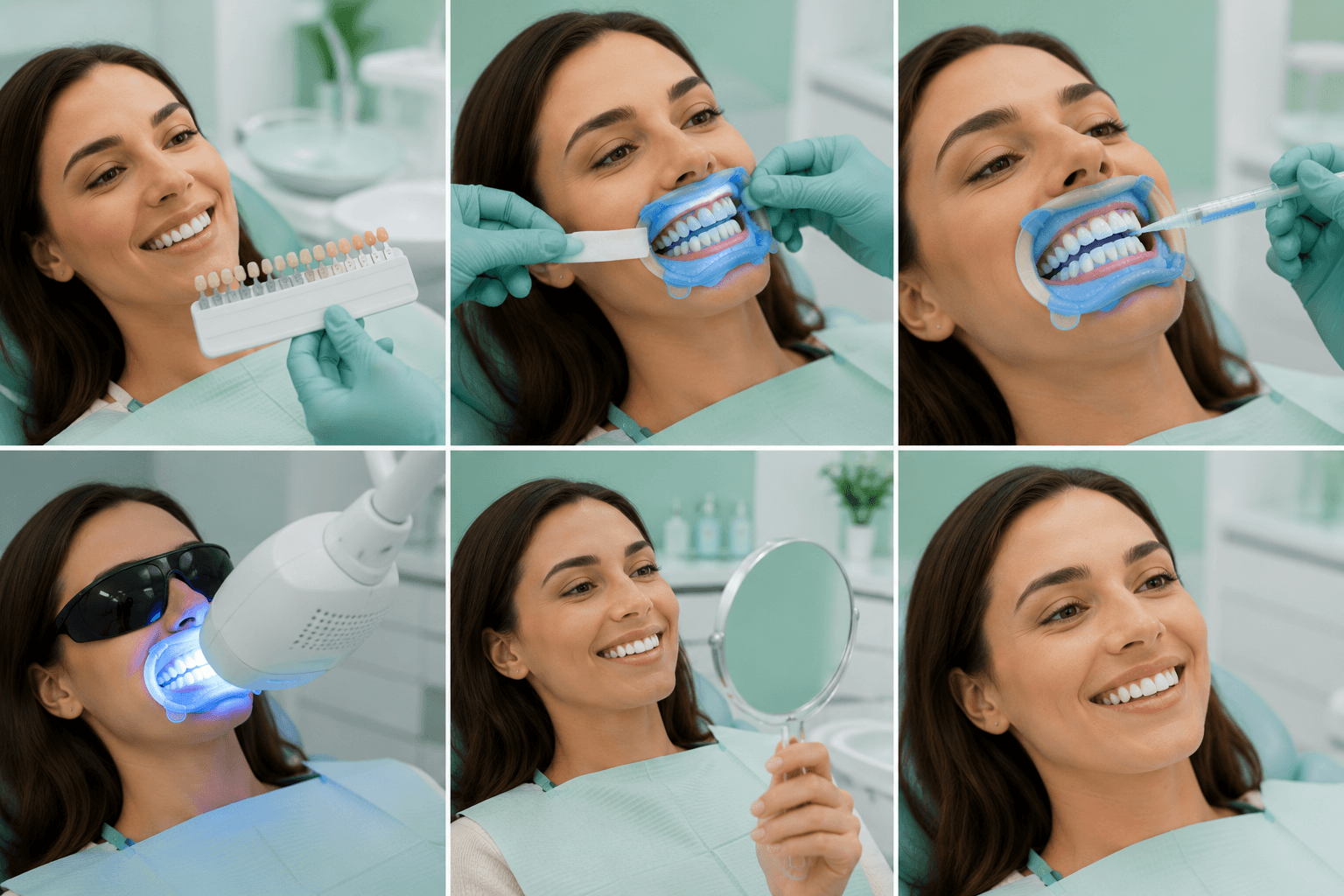
If you have never had your teeth professionally whitened before, the process might feel like a bit of a mystery. You have probably seen the photos and read the promises, but knowing exactly what happens during the session — step by step — makes a real difference in how comfortable you feel going into it. So here is what actually takes place, explained in straightforward terms without any technical jargon.
The session starts with a brief assessment. Your teeth are examined to make sure they are in good condition for whitening — this means checking that there are no untreated cavities, significant cracks, or active gum issues that could cause problems during the treatment. Your current shade is recorded using the VITA shade guide so there is a clear baseline to compare against once the treatment is complete. This part takes only a few minutes and gives you a realistic preview of where your teeth are starting from.
Next, your lips and gums are gently shielded using a protective barrier. This ensures that the whitening gel only comes into contact with the surfaces of your teeth and nothing else. It is a simple precaution that makes the entire process more comfortable and ensures precision.
Once everything is in place, a professional-grade whitening gel is applied evenly across the front surfaces of your teeth. This gel contains active ingredients that are specifically formulated to break down stain molecules within the enamel. It is not the same as what you would find in a shop-bought whitening kit — it is stronger, more concentrated, and designed to work in conjunction with a professional light source.
After the gel is applied, a specially designed light is positioned in front of your mouth. This light activates the gel and accelerates the whitening process, allowing the active ingredients to penetrate the enamel and lift stains more effectively than the gel could do on its own. You sit comfortably while the light does its work — most people listen to music, scroll through their phone, or simply close their eyes and relax. There is no pain, no drilling, no discomfort of any kind for the vast majority of people. If you have mildly sensitive teeth, you might feel a slight tingling sensation, but nothing that most people would describe as unpleasant.
The entire active treatment typically takes about one hour from start to finish. Some sessions involve two or three shorter cycles of gel application and light activation within that hour to maximise results. Once the final cycle is complete, the gel is removed, the protective barriers are taken off, and you are handed a mirror.
That is the moment most people remember. Seeing the difference for the first time, right there, right then. No waiting days or weeks for results to develop. The change is immediate and visible.
Who can benefit from teeth whitening
One of the most common misconceptions about teeth whitening is that it is only for a certain type of person — perhaps someone who is particularly image-conscious, or someone working in a public-facing profession where appearance matters more than usual. The reality is far broader than that. Teeth whitening benefits an incredibly wide range of people, and the reasons they choose to do it are just as varied.
Men and women in their twenties and thirties often seek teeth whitening because years of coffee, tea, and social drinking have started to take a visible toll on their smile. They might not have thought much about their tooth colour until they saw themselves in a photo or a video call and realised the brightness was not what it used to be. For this group, teeth whitening is often a quick reset — a way to undo a few years of gradual staining and get back to a shade they are happy with.
People in their forties, fifties, and beyond tend to come to teeth whitening for slightly different reasons. Age-related yellowing has usually set in by this stage, and even those who have taken excellent care of their teeth notice that the colour has shifted. For this group, teeth whitening is less about reversing damage and more about reclaiming something — a brightness that faded so gradually they did not notice until it was well and truly gone. The results in this age group are consistently encouraging, and many people say it is one of the most impactful things they have done for their appearance in years.
Parents, professionals, retirees, students — teeth whitening does not discriminate. It works across demographics and lifestyles because the underlying mechanism is the same: breaking down stain molecules and restoring the natural brightness of the enamel. Whether you are preparing for a career change, recovering from years of smoking, or simply wanting to feel better about what you see in the mirror every morning, teeth whitening is a practical, accessible option.
A quick note on suitability. Most healthy adults are good candidates for professional teeth whitening. However, if you have untreated cavities, very severe gum disease, or dental restorations like crowns, veneers, or bonding on your front teeth, it is worth speaking with a dental professional before booking a session. Whitening gel works on natural tooth enamel, not on dental materials, so restorations will not change colour during the treatment. This does not mean you cannot have teeth whitening — it just means a professional assessment will help set the right expectations for your specific situation. Pregnant or breastfeeding women are also generally advised to wait until after that period before undergoing whitening treatments, as a matter of standard precaution.
What to expect after teeth whitening
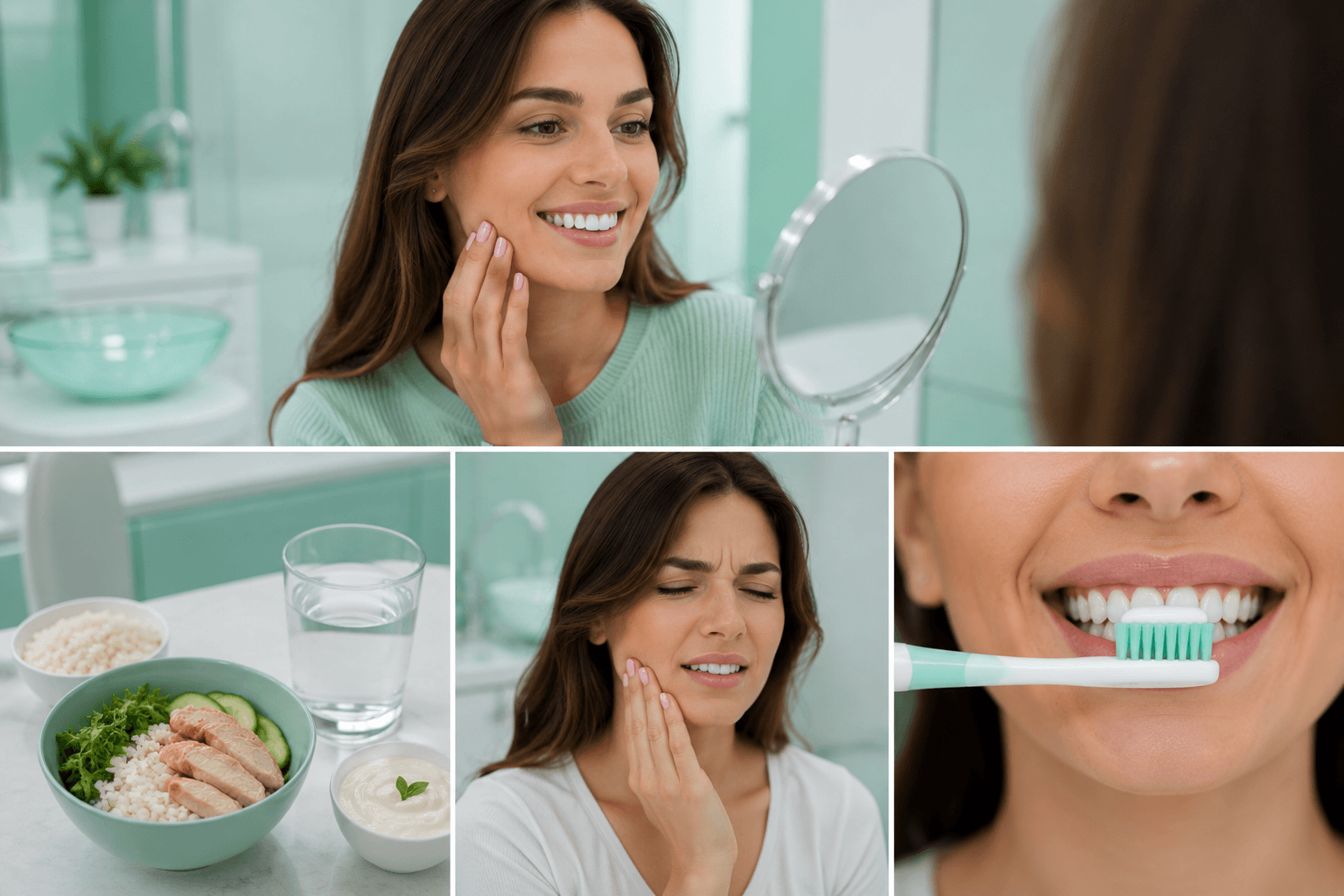
The session is done, you have seen the results, and you are walking out with a smile that looks noticeably different from the one you walked in with. So what happens next? What does the first day, the first week, and the months that follow actually look like?
In the first 24 to 48 hours after your teeth whitening session, your teeth are in what professionals sometimes call the "settling period." During this window, the pores of your enamel are still slightly open from the whitening process, which means your teeth are temporarily more susceptible to picking up new stains. This is why you will be advised to follow a "white diet" for the first day or two — sticking to foods and drinks that would not stain a white shirt. Think plain chicken, rice, pasta, water, milk, and similar items. Avoid coffee, tea, red wine, curry, tomato-based sauces, berries, and anything with strong artificial colouring. It is a short sacrifice for a much longer-lasting result.
Some people experience mild sensitivity in the hours or day following their treatment. This is completely normal and nothing to worry about. The whitening gel temporarily opens the pores of the enamel, which can make the teeth slightly more responsive to temperature changes — so a sip of very cold water or a breath of cold air might feel a bit sharper than usual. This sensitivity is almost always temporary and typically fades within 24 to 48 hours. Using a toothpaste designed for sensitive teeth in the days before and after your session can help minimise this effect.
Once the settling period passes, your teeth are back to normal — just significantly whiter than they were before. The results of a professional teeth whitening session typically last anywhere from several months to well over a year, depending on your lifestyle and habits. People who avoid heavy consumption of staining foods and drinks, maintain good oral hygiene, and do not smoke tend to enjoy the longest-lasting results. Those who go back to three cups of coffee a day and a glass of red wine every evening will see their results fade a little faster — but even then, the teeth remain noticeably brighter than they were before the treatment for a significant period of time.
To keep your smile looking its best for as long as possible, a few simple habits make a real difference. Brush twice a day with a good-quality toothpaste. Rinse your mouth with water after drinking coffee, tea, or red wine — it takes two seconds and makes a genuine impact. Use a straw for cold beverages when practical. And consider a touch-up treatment every six to twelve months if maintaining peak brightness is important to you. These are not dramatic lifestyle changes. They are small adjustments that extend the life of your results considerably.
Common questions people ask about teeth whitening results
When someone is considering teeth whitening for the first time, they almost always have a handful of questions they want answered before they commit. These tend to be the same questions across the board, which tells you something — they are the right questions to ask. Let us work through them.
One of the first things people want to know is whether teeth whitening works on all types of stains. The short answer is that it works extremely well on the most common types — yellowing from coffee, tea, tobacco, red wine, and general ageing. These are known as extrinsic stains (surface-level) and intrinsic stains (below the surface), and professional whitening addresses both. However, there are certain types of discolouration that teeth whitening cannot fully resolve. Staining caused by certain medications — tetracycline antibiotics being the most well-known example — can cause deep greyish or brownish banding within the tooth structure that whitening gel struggles to penetrate completely. Similarly, fluorosis staining (white or brown spots caused by excessive fluoride exposure during childhood) responds inconsistently. In these cases, teeth whitening may still improve the overall brightness of the smile, but it may not eliminate the specific markings entirely. For the vast majority of people, though, professional teeth whitening delivers excellent results.
How many shades whiter can you expect? As mentioned earlier, the typical range is four to twelve shades on the VITA guide. Where you land depends on your starting shade and the nature of your staining. Someone starting with moderate coffee staining might gain eight shades. Someone with mild age-related yellowing might gain five or six. The improvement is always visible, and the exact number matters less than the overall visual impact — which is consistently positive.
People with sensitive teeth are often particularly cautious, and rightly so. The good news is that professional teeth whitening is suitable for the vast majority of people with mild to moderate sensitivity. The gels used in professional settings are carefully formulated to minimise irritation, and the protective barriers applied during treatment keep the gel away from the gums and soft tissues. Some people with sensitivity do experience a temporary increase in sensitivity for a day or two after the session, but this resolves on its own and can be managed easily with sensitive toothpaste. If you have very severe sensitivity or an underlying dental condition that causes it, a quick consultation beforehand will clarify whether teeth whitening is right for you.
How long do teeth whitening results last? This depends almost entirely on you. With good oral hygiene and mindful consumption of staining substances, results can last a year or longer. Without any particular effort to maintain them, you are still looking at several months of noticeably brighter teeth before the shade begins to gradually shift back toward its pre-treatment level. Touch-up treatments can extend results indefinitely for those who want to maintain a consistently bright smile.
A question that comes up more often than you might expect is whether teeth whitening will make your teeth look fake or unnaturally white. This is a legitimate concern, and the answer is reassuring. Professional teeth whitening does not turn your teeth into a flat, opaque, artificial-looking white. What it does is remove staining and reveal the natural brightness of your enamel underneath. The result looks clean, healthy, and natural — not plastic or overdone. Your teeth retain their natural translucency and character. They just look like a significantly brighter, fresher version of themselves.
Can teeth whitening damage enamel? When performed professionally using approved products, no. The whitening gel works by breaking down stain molecules within and on the surface of the enamel — it does not strip, erode, or weaken the enamel itself. This is an important distinction. Shop-bought products that use abrasive ingredients (like some charcoal-based products or harsh baking soda formulations) can potentially wear down enamel over time with repeated use. Professional whitening does not carry that risk because it works chemically, not abrasively.
And that brings us to the difference between professional teeth whitening and the kits you can buy from a shop or online. The core difference is concentration, precision, and supervision. Professional whitening uses stronger, more effective gels that are applied under controlled conditions by someone trained to use them. Shop-bought kits use significantly weaker formulations — partly for safety reasons, since they are designed for unsupervised home use — and they often come with ill-fitting trays that allow the gel to spread unevenly. The result is typically a much milder improvement (if any), inconsistent coverage, and a higher likelihood of sensitivity or gum irritation. Professional teeth whitening costs more upfront, but it delivers results in a single session that most home kits cannot match over weeks of use.
The confidence factor — how a whiter smile changes how you feel
Let us step away from shades and stains for a moment and talk about something less measurable but arguably more important — how teeth whitening makes people feel.
There is a particular kind of self-consciousness that comes with not being happy with your teeth. It is not always dramatic. Most people do not walk around constantly thinking about their tooth colour. But it is there — in the background — influencing small decisions throughout the day. You smile with your lips closed instead of showing your teeth. You angle your head in photos so the light does not catch your mouth. You laugh with your hand covering your face. You avoid certain shades of lipstick because they make your teeth look more yellow. These are tiny adjustments, barely noticeable to anyone else, but they add up. Over time, they become habits. And habits shape how you move through the world.
After teeth whitening, something shifts. It is not just that your teeth look different — it is that you feel different about showing them. People who used to smile cautiously start smiling openly. People who dreaded photographs start leaning into them. People who kept their distance in conversations — literally positioning themselves so others would not see their teeth up close — start engaging more freely. These changes do not happen because someone told them to behave differently. They happen naturally, almost unconsciously, because the thing that was holding them back is no longer there.
The psychological impact of a whiter smile is well documented, but it is also deeply personal. For some people, it is about professional confidence — walking into a meeting or a presentation knowing that their appearance matches the competence they bring to the table. For others, it is about social ease — feeling comfortable on a date, at a party, or at a family gathering without that nagging awareness of their teeth in the background. For many, it is simply about the relationship they have with their own reflection. Looking in the mirror and liking what you see is not vanity. It is a fundamental part of wellbeing.
What is particularly interesting is how other people respond to the change. Studies have consistently shown that a bright, healthy smile is one of the first things people notice about someone's appearance. It influences perceptions of attractiveness, trustworthiness, competence, and friendliness — often within the first few seconds of meeting someone. You do not need to be aware of these studies to feel their effects. When your smile looks good, people respond to you slightly differently. They make more eye contact. They mirror your expression. They perceive you as warmer and more approachable. None of this is life-changing on its own, but taken together, it creates a subtle positive feedback loop that reinforces confidence from the outside in.
Teeth whitening is not a magic cure for deep insecurity, and it would be irresponsible to suggest it is. But for the specific, targeted concern of not being happy with the colour of your teeth, it is remarkably effective — not just at changing how your teeth look, but at changing how you feel about showing them.
Final thoughts
If you have read this far, you now have a thorough understanding of what teeth whitening results genuinely look like — not the glossy, over-edited, too-good-to-be-true version, but the real, grounded, honest version. You know what different types of staining look like before treatment and how they respond afterward. You know how the process works, what the experience feels like, and what the first few days of aftercare involve. You know who teeth whitening is suitable for, what the limitations are, and how long results typically last. And you know that the impact goes beyond aesthetics — that a brighter smile has a real, measurable effect on confidence and self-perception.
The before and after results on this page are not outliers. They are not cherry-picked best-case scenarios. They represent the kind of transformation that professional teeth whitening delivers consistently, session after session, across a wide range of starting points and stain types. Four to twelve shades brighter, achieved in a single one-hour session, with no damage to the enamel and no lasting discomfort. That is not a marketing claim. That is what the shade guide shows, and that is what people see when they look in the mirror afterward.
Whether you are dealing with years of coffee staining, the lingering effects of smoking, the natural yellowing that comes with age, or you simply want your smile to look its best for an important event — the results speak for themselves. Not in slogans or sales pitches, but in the quiet, undeniable difference between the shade your teeth were before and the shade they are after.
Your smile is one of the first things people notice about you. It is also one of the first things you notice about yourself every single morning. If the colour of your teeth has been something you have thought about — even in passing, even just occasionally — then you already know it matters to you. And that is reason enough to take the next step, whatever that looks like for you.